South Africa Urged to Sanction Israel Over Coal Exports
South African BDS Coalition has called on the government to sanction Israel by halting coal exports, submitting a legal report to the Department of Trade, Industry and Competition arguing that continued coal trade violates international law and could make South Africa complicit in alleged human rights violations amid the Gaza conflict.
 Delicious Mathuthu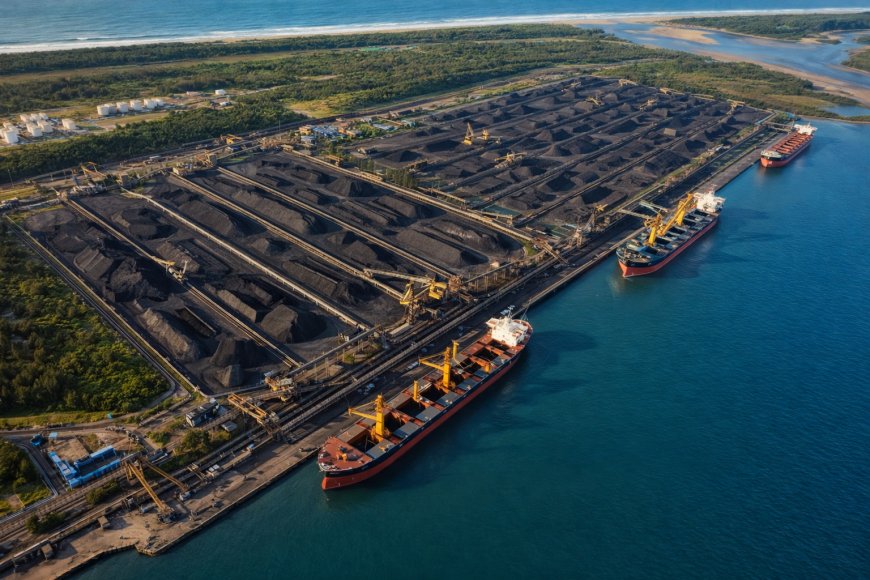
Pretoria - The South African Boycott, Divestment and Sanctions (BDS) Coalition has submitted an advisory report to the Department of Trade, Industry and Competition (DTIC) on Monday, calling on the government to immediately stop coal exports to Israel on the grounds that the trade violates South Africa’s obligations under domestic and international law amid the ongoing conflict in Gaza.
The coalition, a network of Palestine solidarity groups and the official South African affiliate of the Palestinian BDS National Committee, delivered the document at the DTIC campus in Sunnyside, Pretoria.
The move follows a media alert issued on Friday in which the group described the exports as direct complicity in what it termed genocide, unlawful occupation and crimes against humanity.
“Our advisory report provides a comprehensive, factual and legal analysis of South Africa’s obligations under domestic and international law in relation to the continued export of coal to Israel amid the ongoing genocide, unlawful military occupation and other crimes against humanity,” the coalition said in its statement.
The submission coincides with heightened regional tensions.
Israel has faced accusations of continuing military operations in Gaza despite a reported ceasefire last October, while separate escalations have involved Lebanon and Iran.
“In this ‘might makes right’ era, the Apartheid state of Israel and imperialist United States are waging an illegal war on Lebanon and Iran while Israel continues to bombard and blockade Gaza, directly killing over 600 people since the start of the so-called ‘ceasefire’ last October and escalating their ethnic cleansing, unlawful arrests and murder of Palestinians in the West Bank,” the grouping said.
They pointed to a series of international legal rulings and diplomatic initiatives as the basis for its demands.
They referenced South Africa’s landmark case against Israel at the International Court of Justice under the Genocide Convention, the ICJ’s July 2024 advisory opinion declaring Israel’s occupation of Palestinian territories illegal, and United Nations General Assembly resolution ES-10/24 adopted in September 2024 that called for Israel to end its presence in the occupied territories.
In March 2026, South Africa and Colombia, as co-chairs of The Hague Group, signed a commitment to block transfers of arms, munitions, military fuel and dual-use items to Israel through export controls, port measures and flag-state responsibilities.
“Apartheid Israel’s impunity will only end when states take action in line with international law,” the report said.
Colombia led the way in 2024 by issuing a decree banning coal sales to Israel, followed by a reinforcing decree in 2025.
South Africa has since become the largest supplier of coal to the country, the coalition said.
“South Africa has taken up the baton from Colombia, becoming the largest exporter of coal to Israel.
“This coal is used to generate electricity, feeding into the Israeli electricity grid, fueling the genocide, military industrial complex, illegal regional war and ongoing settler-colonial system of apartheid against the Palestinian people," they said.
Trade data cited in the alert shows that while South African coal shipments to Israel have risen sharply, they still represent less than 3 percent of the country’s total coal exports.
At the same time, the coal supplied around 25 percent of Israel’s coal-powered electricity generation in 2025.
The coalition argued that ending the trade would inflict significant pressure without harming South Africa’s economy.
“In the current moment, where the US and Israel are creating a global energy crisis, halting our coal sales will deal a major blow to genocidal Israel’s energy security,” the statement read.
“This is a legitimate mechanism South Africa can use to sanction and hold it accountable for its criminal actions.
“As coal exports to Israel represent only a very small proportion of our overall coal export trade and, when viewed against total export volumes, the discontinuation of such exports will not negatively impact on South Africa’s coal export sector,” the coalition said.
The factual and legal evidence in the report, the coalition insisted, leaves the government no choice but to act.
“The factual evidence provided in our report coupled with an analysis of the applicable legal framework and binding duties compel government to take urgent and immediate action to ensure the cessation of their own complicity in the ongoing human rights violations taking place in Palestine and beyond," they said.
The alert singled out Trade, Industry and Competition Minister Parks Tau, noting that existing legislation already empowers him to impose restrictions.
“The Minister of Trade, Industry and Competition, Parks Tau, is empowered through existing legislation to ensure that South Africa complies with its domestic and international legal obligations by restricting the exports of coal to Israel in order to prevent ongoing complicity in Israel’s crimes against humanity,” they said.
As the report was being delivered, the group said the bulk carrier Navios Mars was scheduled to depart from Richards Bay Coal Terminal bound for Ashkelon in Israel carrying another load of South African coal.
“We urge Minister Tau to act in support of South Africa’s national interest, international law and solidarity with the Palestinian people," the coalition appealed.
Reports reveal that the coal exports debates has gained prominence in some quarters in South Africa since Colombia’s ban left a supply gap that the nation's producers filled from late 2025 onward.
South Africa’s vocal stance against Israel stems from its own history of apartheid and its role as lead applicant in the ICJ genocide case filed in December 2023.
The court issued provisional measures ordering Israel to prevent genocidal acts but has not yet delivered a final verdict on the genocide allegation, which Israel strongly denies.