Brothers Jailed 23 Years Each for Kwekwe Mine Murder
 Dumisani Ndlovu
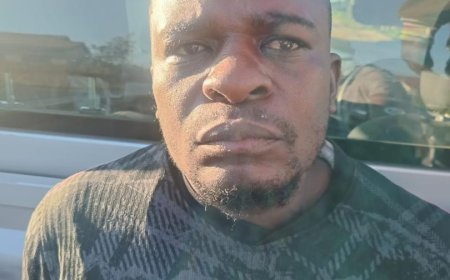
Gweru - The High Court of Zimbabwe on Tuesday, January 27, sentenced two brothers, Dingani and Danmore Mpofu to 23 years in prison for the murder of Misheck Makuvaza, who was fatally assaulted during a violent confrontation at Big Boom Mine compound in Kwekwe.
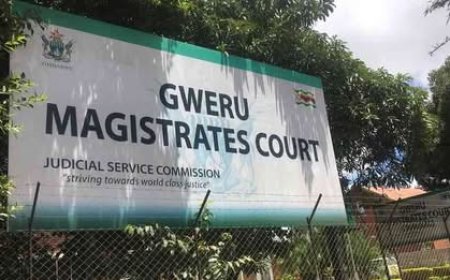
Handing down the verdict at the Gweru High Court circuit, Bulawayo High Court judge, Justice Munamato Mutevedzi rkuled that the state, led by seasoned Prosecutor Talent Tadenyika, had proved beyond reasonable doubt that the two men acted in common purpose in the attack that led to Makuvaza’s death on 26 August 2022.
“The accused persons were present at the scene and actively associated themselves with the conduct that resulted in the death of the deceased,” Justice Mutevedzi said, adding that "their actions, viewed collectively, leave no room for doubt that they were acting in the execution of a common design.”
The court heard that Makuvaza was attacked at night near the mine compound tuckshop after a confrontation involving the two accused and their accomplices.
Evidence established that knives were produced during the assault, and that the deceased was later dragged into a dark area where the fatal injuries were inflicted.
Post-mortem findings, admitted by consent, showed that Makuvaza died from injuries consistent with sharp-force trauma, corroborating with a witness testimony that knives were used during the attack.
Dingani denied assaulting the deceased, insisting he was involved in a separate altercation with an unknown person and only learnt of Makuvaza’s death the following morning.
“I deny the allegation,” the first accused told the court, adding: “Makuvaza was fighting with other people in the darkness.”
The court however found his version contradictory and implausible, particularly when weighed against his own confirmed warned and cautioned statement.
Danmore on the other hand admitted assaulting the deceased, conceding that he punched Makuvaza several times although he attempted to distance himself from the stabbing.
“I admit causing the death of Makuvaza,” the second accused stated, however saying “I assaulted him with fists.”
Justice Mutevedzi dismissed attempts by both accused to retreat from their recorded statements, noting that they neither alleged coercion nor challenged their admissibility during trial.
“Their belated attempts to disown statements freely and voluntarily made can only be described as futile,” the judge said.
The court carefully evaluated testimonies from eyewitnesses, including a woman who heard the deceased calling out names during the assault.
Although she could not visually identify the attackers due to darkness, Justice Mutevedzi ruled that her evidence could not be viewed in isolation and was materially corroborated by medical findings and the accused’s own admissions.
“The law does not require evidence to stand alone,” the judge said, “what matters is whether, taken together, the evidence forms a coherent and credible narrative.”
In convicting both men, the court relied on Section 196A of the Criminal Law (Codification and Reform) Act, which governs liability where offenders act in concert.
“We are not concerned with who struck the fatal blow. Once common purpose is established, the conduct of one becomes the conduct of all,” Justice Mutevedzi said.
The judge found that the accused were present at the crime scene, associated themselves with the violent conduct, and failed to disengage, making them equally culpable for the murder.
“The State has discharged its burden,” Justice Mutevedzi concluded, “the accused persons’ versions are rejected as false beyond reasonable doubt.”
Both Dingani and Danmore Mpofu were found guilty of murder as defined in Section 47 of the Criminal Law (Codification and Reform) Act and subsequently sentenced to 23 years’ effective imprisonment each.
The other two accomplices are still at large.
The first accused was represented by Ignatius Mupfiga of Dube, Gundu and Pamacheche Legal Practitioners, while the second accused was represented by Earnest Muzembe
The packed courtroom sat in silence as the sentence was pronounced, bringing to a close a case that laid bare the deadly consequences of mob violence and shared criminal intent.