
Two Life Sentences for Burning Two Minors (5 &13) in Hut
 Dumisani Ndlovu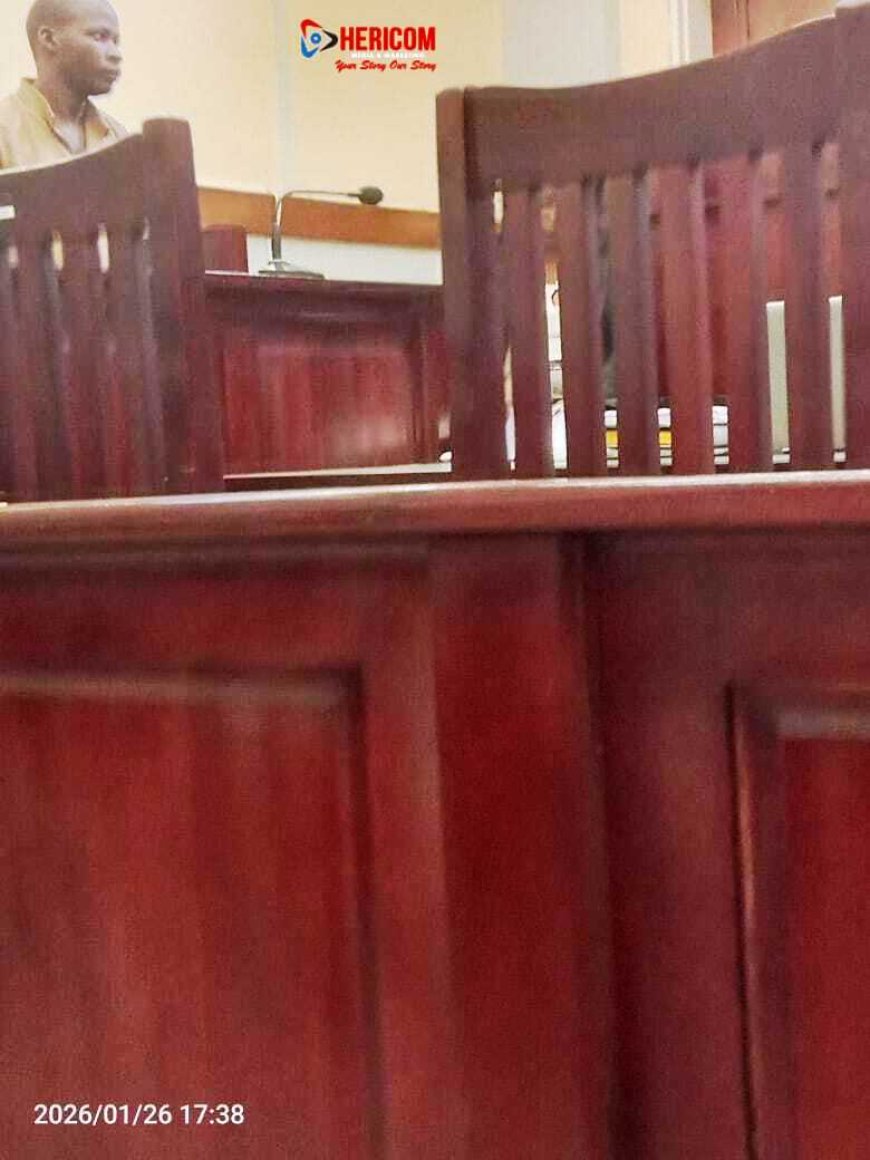
Gweru - A heavy silence settled over a near-full courtroom as Bulawayo High Court judge Justice Munamato Mutevedzi sentenced a 20-year-old Gweru man to two life sentences for the death of two minors who were burnt alive inside their bedroom hut.
The convict, Abel Mativenga, of Mahalape Compound, Watershed Farm in Gweru, was found guilty of killing 13-year-old Everjoy Mangena and five-year-old Natasha Kanyama, whose bodies were burnt beyond recognition on the night of 19 August 2025.
As Justice Mutevedzi read out the sentence, members of the public crowded into the gallery remained motionless, some clasping their hands, others lowering their heads as the final details of the case were laid bare.
Evidence before the court revealed that earlier that evening, Mativenga had been drinking at Mkoba 6 Business Centre with his sister, Chiedza Siziba, and a neighbour, Cleopas Moses.
During the drinking session, he openly expressed anger towards the children’s mother, Sipiwe Machisa, accusing her of calling his parents witches.
Despite being warned by his companions, Mativenga later left the business centre, obtained a cigarette lighter from his father, and went to the hut where the two girls were asleep.
He tied the door shut with a wire from the outside, deliberately blocking any escape, before setting the hut on fire.
Witnesses told the court that after igniting the blaze, Mativenga hid nearby and watched as the hut burned, while the children cried out for help.
In his ruling, Justice Mutevedzi said the murders were committed in aggravating circumstances and were planned and carried out deliberately.
“The offender in this case, thereafter, on how to commit the murders, carefully executed his plan. He admitted so in his statement to the police,” the judge said.
Justice Mutevedzi said the act of tying the door from the outside before starting the fire amounted to “unmitigated evil.”
“By doing so, he not only ensured that the girls could not escape, but also that no one could rescue them from outside,” he said.
During the ruling, Justice Mutevedzi publicly acknowledged the State’s conduct of the case, briefly turning to prosecutor Michael Mhene and giving him a gentle pat on the back.
He commended Mhene for his methodical presentation of evidence and for proving beyond reasonable doubt that the offence was committed in multiple aggravating circumstances.
The acknowledgment drew quiet murmurs from the gallery.
Justice Mutevedzi dismissed any suggestion of leniency, noting that following the abolition of the death penalty in December 2021, the law left the court with only two sentencing options for murder, life imprisonment or a minimum of 20 years.
“Before the abolition of the penalty, this was a case that would have undoubtedly attracted capital punishment. That option is no longer available,” he said.
He said rehabilitation carried little weight in crimes of this nature.
“In a crime that is as bad and as gruesome as this matter, we must emphasise punishing the offender and warning like-minded criminals more than any other objective of punishment,” Justice Mutevedzi said.
From the defence counsel Tinashe Makotore had urged the court to consider Mativenga’s youth in mitigation, arguing that at 20 he was still young and would live with the consequences of his actions for the rest of his life.
The court rejected the submission.
“No amount of mitigation can persuade the court to amend the routine obliteration in the lives of little children,” Justice Mutevedzi said.
“People who behave like the accused person should be removed from society as they are dangerous and reckless," he said.
As the sentence was finally pronounced, the courtroom remained silent.
“The court is persuaded that there is no other scope of punishment for the offender in this case, he is terminally removed from society.
"Count one, life imprisonment; count two: life imprisonment,” Justice Mutevedzi said.