Gweru American Corner Honored for Transforming Local Lives
The Gweru American Corner is recognised for empowering communities through knowledge, skills development and professional opportunities, while a journalism boot camp encourages citizen journalists to embrace data, creativity, curiosity and credibility.
 Dumisani Ndlovu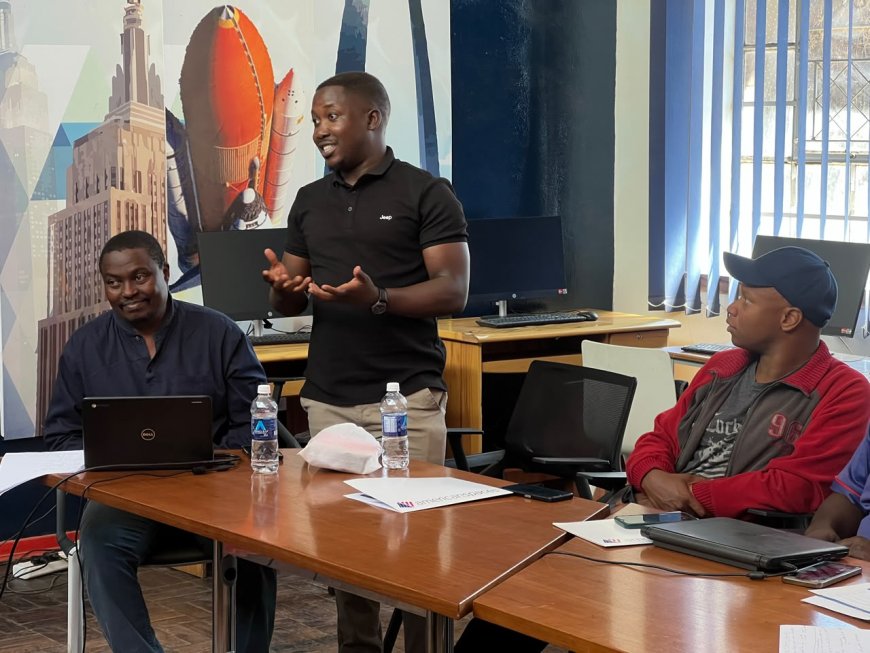
Gweru — The Gweru American Corner has been commended for its contribution to transforming lives through access to knowledge, skills development, professional networking and opportunities.
Public Engagement Specialist and Communicator in the Public Diplomacy Section of the United States U.S. Embassy in Harare, Sizani Weza urged journalists to make greater use of available resources to produce credible, evidence-based journalism.
He made the remarks virtually during a Creative News and Data Journalism boot camp in Gweru, where citizen journalists were trained in creative storytelling and the use of data to produce journalism that informs, engages and influences communities.
The American Corner initiative, supported by the United States Government through its Embassy network, provides access to information and educational resources while facilitating cultural programmes, discussions and engagement with specialists.
It has also supported interaction and capacity building among Zimbabwean media professionals.
Weza, a veteran media practitioner who has worked in Zimbabwe's journalism and media development sector for decades, said such programmes remain important at a time when journalists were operating under increasingly difficult resource constraints.
He encouraged participants to master low-data tools, saying impactful journalism did not necessarily require expensive software or massive datasets.
“You don't need expensive software or massive data sets to produce impactful journalism,” Weza said, urging journalists to use accessible platforms such as WhatsApp groups, Google Forms and basic mapping tools to gather, verify and distribute information.
He challenged journalists to view data journalism not simply as a numbers exercise, but as a means of establishing truth.
“Data journalism is not about numbers. It's about proof,” he said.
According to Weza, evidence-based storytelling enables journalists to expose the truth, challenge assumptions and improve public understanding.
He also reminded journalists that their role goes beyond informing, educating and empowering citizens to making complex issues understandable to ordinary people.
“Clear writing is a public service,” he said, stressing that simplifying complex issues can empower citizens to better understand matters affecting their lives.
Weza urged journalists to cultivate curiosity and develop the ability to uncover stories hidden in plain sight.
He said good journalists should not wait for stories to arrive, but should actively identify patterns, anomalies, gaps and contradictions, including those contained in data that may not immediately be visible to the public.
The veteran media practitioner reserved a strong message for the issue of trust, urging journalists to rebuild public confidence through transparency at a time when misinformation is widespread and trust in news remains under pressure.
“Your credibility is your currency,” Weza said.
He urged journalists to demonstrate their methods, cite their sources and explain how they arrived at their conclusions, saying transparency strengthens credibility and improves public discourse.
Weza also highlighted opportunities available to Zimbabwean journalists through U. S. Embassy programmes, including Foreign Press Centre reporting tours, which can provide selected journalists with opportunities to report from the United States on issues of mutual interest.
The intervention added weight to a training programme aimed at strengthening the capacity of citizen journalists to produce more creative, accessible and data-informed stories.
The boot camp was facilitated by seasoned journalist Norman Dururu and Media Institute of Southern Africa (MISA) Zimbabwe Gweru Chairperson, Terry Madyauta.