Government Deals With Individuals Not Institutions, Agric Deputy Minister Says on PWDs Farming Inputs
Zimbabwe's Deputy Agriculture Minister Vangelis Haritatos explains that Pfumvudza/Intwasa agricultural inputs go to vulnerable individuals, including those with disabilities, rather than organisations like Mudavanhu, ZIMCARE Trust and Jairos Jiri. Responding to MPs in Parliament, he committed to alerting Agritex for targeted training to enhance productivity and ensure no one is left behind under Vision 2030.
 Delicious Mathuthu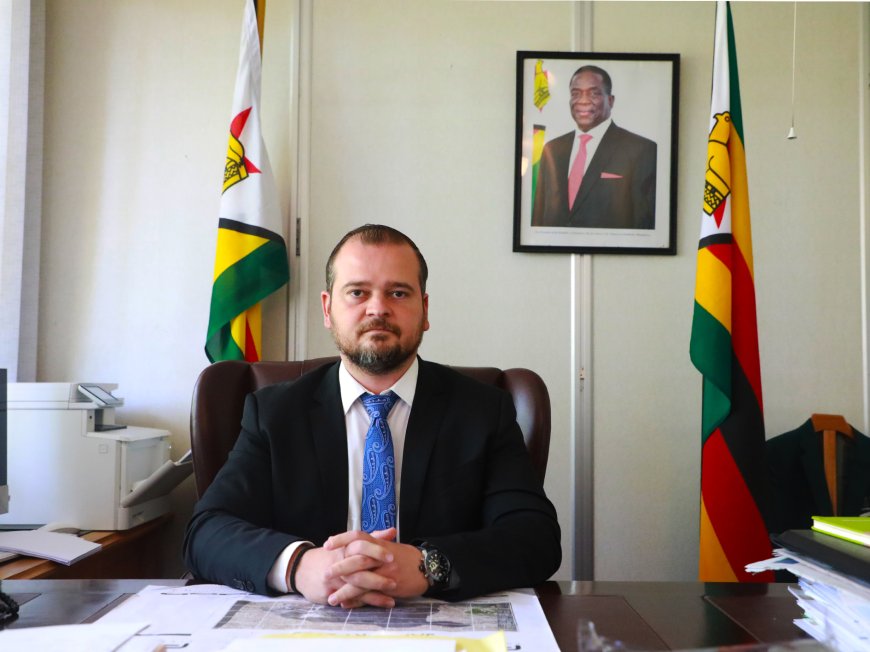
Harare - Zimbabwe Deputy Minister for Lands, Agriculture, Fisheries, Water and Rural Development, Honourable Vangelis Haritatos, said the Government’s flagship farm inout support programme only targets vulnerable individuals, including people with disabilities, rather than institutions that assist them.
He said this during a Parliament question and answer session in response to Mkoba South Legislator, Hon. John Kuka's question on whether the Ministry of Lands would provide agricultural inputs to organisations operating in his constituency.
Thanking the MP for the question, Deputy Minister Hon. Haritatos told the House that the Pfumvudza/Intwasa programme targets vulnerable individuals in society.
“The Government’s primary smallholder support programme for this season remains the Pfumvudza/Intwasa, climate-proofed agricultural concept. The objective of this programme was to reach the most vulnerable households directly.
"Therefore, the policy is to provide these Pfumvudza/Intwasa inputs to individual vulnerable farmers, which includes persons with disabilities who are part of the registered farming households,” the Deputy Minister said.
He detailed the standardised input package, which varies slightly by agro-ecological region but typically includes 5 kg or 10 kg of maize seed, or 5 kg sorghum, 2 kg of other traditional grains and oil seeds, a 50 kg bag each of basal fertiliser, top-dressing fertiliser and lime, plus crop protection chemicals.
Hon. Kuka pressed for direct assistance to the institutions, noting that many rely on dwindling external handouts and that programmes such as poultry distribution would give residents both food security and meaningful activity
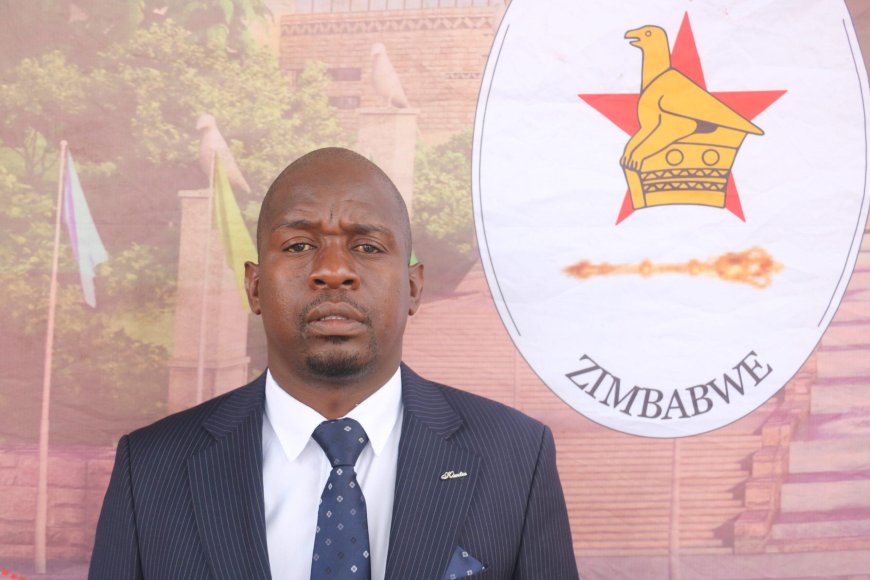 Hon. John Kuka
"I have seen that these groups like Mudavanhu, ZIMCARE Trust and Jairos Jiri, many of them rely on some handouts or assistance. As we speak right now, some of those people who were assisting them have stopped.
"So what measures are being taken to make sure that these groups will be given the assistance? There are some programmes, like poultry handouts and some projects.
"What measures will be taken by the Government so that these groups of people are able to have this? This will help them to have enough food as well as to have something to do," Hon. Kuka asked
Deputy Minister Haritatos reiterated the individual-first policy.
“As I mentioned in my response that the Government support is directed to the individual versus the organisation. Now, the organisation is made up of individuals.
"So, what I would recommend is that the individuals who form part of the Mudavanhu, for example, or the Zimbabwe Care Trust or Jairos Jiri Trust, independently or individually approach, because remember, it is a committee that sits down and resolves who is deemed vulnerable in the community… Let the individual units that make up the organisation approach the committees and let them register their individual names, their ID (identity card) numbers, so that it is fully transparent and the system has its audits and it works well," he said.
Haritatos added that beneficiaries of any Presidential Input Programme, whether Pfumvudza/Intwasa, poultry or others, are selected on the same criterion, the most vulnerable households.
Warren Park Legislator, Hon Shakespeare Hamauswa, then intervened, asking whether carers of people with disabilities could receive specialised extension support from AGRITEX officers to ensure recipients with disabilities receive appropriate training and mentorship once given inputs.
The Deputy Minister responded positively, revealing that Zimbabwe has 6,000 AGRITEX officers and had trained just over three million farmers last season, the majority of them women.
He noted the existence of more than 34,000 farmer field schools and said targeted training for people with disabilities, including those unable to attend standard sessions, could be arranged at district level.
“If it is to train specific people with disabilities or people who maybe cannot make it to a farmer field school… then this is something that definitely can be arranged, but it needs to be initiated by the district.
"What we can do to solve this issue is that I will alert the Chief Director of Agritex… that these are the groups that we want to specifically look at. They should be taught so that they get skills and it is something that I do support very closely to my heart… I will definitely implement what I am saying," Hon. Haritatos said.
He concluded by linking the initiative to the national development agenda.
“If it means that we teach more people who are farming, if it means that we increase the productivity, the production of our country and of our people so that they move within what our President wants, Vision 2030, then this is what we must do… We want to uplift the livelihoods of everyone and so we will not leave anyone behind," he said.
No immediate timeline was given for the rollout of the promised Agritex outreach, but the Deputy Minister said he would personally instruct the relevant Chief Director to prioritise the three named organisations in Mkoba South.