From Silence to Stitching Hope: How a Shurugwi Woman is Redefining Disability Through Art
From Ruchanyu Village in Shurugwi, artist Sandra Chimwanda defies disability stigma with extraordinary knitting skills, winning top honours at the Skills Fair and calling for support to expand her craft and inspire disability inclusion in Zimbabwe.
 Dumisani Ndlovu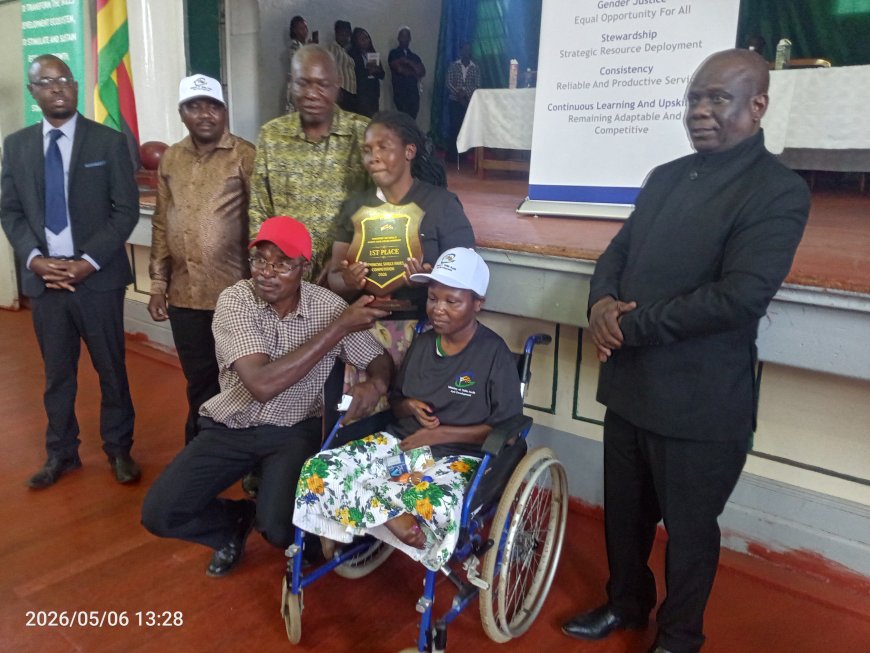
Gweru - In the dusty rural paths of Ruchanyu Village in Shurugwi, where opportunities are often limited and persons with disabilities are too frequently overlooked, one woman is quietly weaving a revolution, not with perfect hands, but with extraordinary determination.
At first glance, 35-year-old Sandra Chimwanda appears like any other villager navigating the hardships of rural life. But behind her gentle smile lies a story of pain, resilience, creativity and defiance against a society that often measures ability through physical perfection.
Born with Symbrachydactyly, a rare condition that left one of her hands significantly smaller and shorter than the other, Sandra’s life was shaped by struggle from the very beginning.
A later surgical procedure linked to her condition confined her to a wheelchair, a reality that could easily have crushed her dreams and spirit. Instead, it ignited something within her.
Today, Sandra is no longer defined by disability. She is defined by artistry.
Using her legs, mouth and tongue, the self-taught knitting and craft artist creates beautifully designed woollen hats, jerseys, scarves, doormats and fashion pieces for both children and adults.
Every thread she twists into place tells a story of courage. Every stitch is an act of resistance against stigma, exclusion and hopelessness.
Her breathtaking talent has earned her top honours in the visual arts category under the disability section during the two-day Skills Fair held at Chaplin High School in Gweru a moment that transformed a rural woman once hidden from public view into a beacon of inspiration.
As judges announced her name, emotions overwhelmed her.
“This is unbelievable,” Sandra said, fighting back tears of joy after receiving the award.
“When I heard about this fair, I never thought I would become the winner. Little did I know I would make the news, especially coming from a rural setting and competing with people who are well-resourced,” she said.
For many at the exhibition, Sandra’s victory was more than just a competition result but a powerful statement about human potential and the urgent need to dismantle barriers faced by persons with disabilities.
In Zimbabwe and across much of Africa, many persons with disabilities continue to face social exclusion, poverty and limited access to education, employment and economic opportunities.
In rural communities particularly, many talented individuals remain trapped in invisibility, not because they lack ability, but society has failed to create enabling environments for them to thrive.
Sandra’s journey exposes both the pain of exclusion and the transformative power of opportunity.
Her love for knitting began not in a classroom or vocational centre, but through observation.
“I started by observing other people knitting using their hands,” she explained,
“when I got home, I asked myself what could stop me from doing this despite having dysfunctional hands. That is when I developed this skill.”
That simple but profound question changed her life.
Without formal training, expensive equipment or institutional support, Sandra taught herself how to manipulate wool into colourful artistic products.
In moments where physical limitations become overwhelming, an assistant helps her secure certain finishing touches.
But the creativity, vision and craftsmanship belong entirely to her.
At the Skills Fair, her exhibition stand drew crowds of astonished onlookers who struggled to comprehend how someone working without fully functional hands could produce such intricate designs.
Among those deeply moved by her work was Chief Director in the Ministry of Skills Audit and Development, Dr Cliff Matorera, who described Sandra’s story as both inspiring and deeply challenging to society.
“What Sandra has demonstrated here is extraordinary,” said Dr Matorera.
“Her talent and determination deserve support and recognition.
"Disability is not inability, and her work is proof that with the right support, persons with disabilities can meaningfully contribute to the economy," he said.
Dr Matorera promised to engage ministries and stakeholders directly, aiming to clear the path for her business to expand and overcome some of the barriers hindering her business growth.
“I have asked her to provide a list of the challenges she is facing so that we can engage the relevant ministries and stakeholders to see how best assistance can be mobilised to help her expand her projects and access wider markets,” he said.
Yet behind the celebration and applause lies a difficult reality.
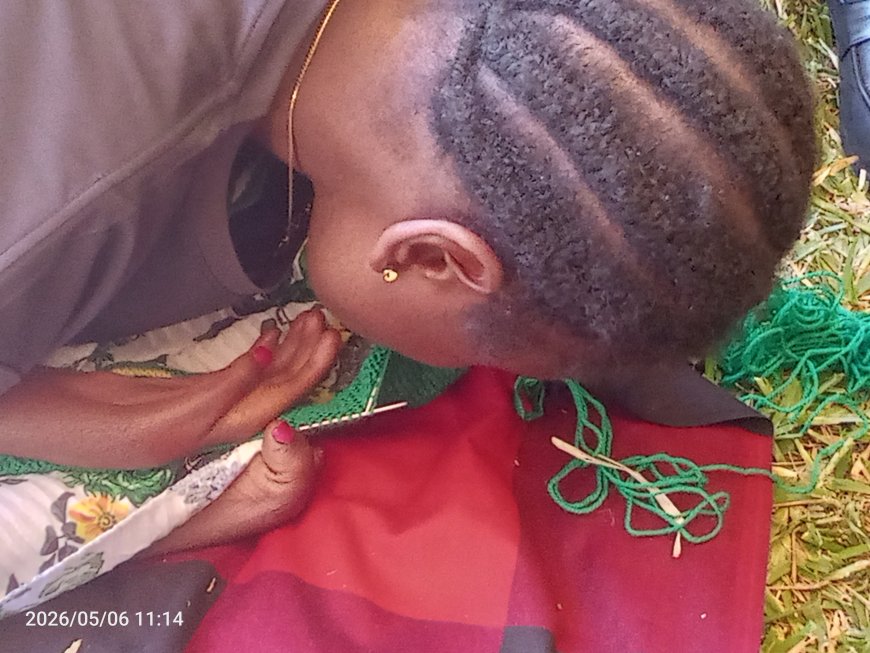 Sandra Chimwanda demonstrates her unique knitting skills using her mouth and feet, creating intricate wool designs that reflect her resilience and creativity as a person with a disability.
Like many rural entrepreneurs with disabilities, Sandra continues to battle limited resources, inadequate equipment and restricted market access.
Her products occasionally find buyers through local schools and supportive community members, but sustainable growth remains painfully out of reach.
“At times local schools support me by buying my products,” she said. “I appeal to well-wishers to help me expand my business.”
Her appeal reflects the daily struggle of thousands of gifted persons with disabilities whose talents remain overlooked and economically underutilised.
Advocacy groups have long argued that disability inclusion should move beyond sympathy and ceremonial recognition towards meaningful investment, accessible infrastructure, financial support and empowerment programmes.