
Australian Corporates Challenged to Dismantle Workplace Gendered Racism
A four-year initiative spearheaded by Diversity Council Australia has exposed major systemic barriers preventing culturally and racially marginalised women from climbing the corporate ladder.
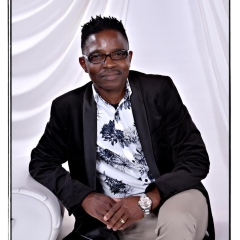 Harry Taruva
Melbouene — Australian corporations are facing urgent structural mandates to dismantle entrenched "one-size-fits-all" corporate diversity frameworks following authoritative findings that gendered racism continues to systematically exclude women from executive-level positions.
The directives form the baseline of "The RISE Project: an Insights Report", a comprehensive evaluation charting the early findings of the landmark four-year Realise, Inspire, Support, Energise (RISE) initiative.
Financed by the Australian Government’s Office for Women, the project is a coordinated statutory intervention managed by Diversity Council Australia (DCA), Settlement Services International (SSI) and Chief Executive Women (CEW) to systematically expand executive career pipelines across 25 prominent national enterprises.
The multi-year diagnostic audit tracked the career progressions of 360 culturally and racially marginalised (CARM) women embedded across a diverse cross-section of the domestic economy, including major banking conglomerates, elite academic institutions and national retail chains.
Early analytical findings compiled from over 620 specialised executive coaching sessions confirm that substantial, sustainable institutional equity occurs only when organisations actively shift from passive intent to aggressive structural execution.
Data validated within the report reveals that 269 participating personnel successfully achieved near-term career milestones, with 63 individual CARM women securing advanced promotions or new leadership placements despite pervasive cultural barriers.
Dr. Virginia Mapedzahama, DCA’s Racial Equity and Intersectionality Director and RISE Project Lead, stated that typical corporate diversity metrics frequently fail to isolate the compounding impacts of concurrent racial and gender biases.
“In 2023, DCA’s landmark CARM Women in Leadership report identified the entrenched systemic barriers CARM women face in Australian workplaces,” Dr. Mapedzahama said.
“As this project comes to an end, our hope is that these findings will inform and strengthen ongoing efforts to drive systemic change so that more CARM women can access the leadership opportunities they deserve.
"If organisations want different leadership outcomes, they need to ask different questions, listen more carefully to the women most affected and be willing to change the systems that hold inequity in place,” she said.
The diagnostic analysis isolated several core operational disciplines critical to reversing homogenous executive appointments, noting that maximum progress occurred when organisations focused on building advanced internal racial literacy, embedding CARM insights directly into operational decision-making, and expanding transparent access to professional sponsorship and influential commercial networks.
SSI Chief Executive Officer (CEO), Violet Roumeliotis, warned that standard workplace promotion patterns continue to experience a severe drop-off in multicultural representation as seniority increases.
“In many organisations, the higher you move up the leadership pipeline, the less diverse it becomes,” Roumeliotis observed.
“That pattern reflects the structural and attitudinal barriers that CARM women continue to face in Australian workplaces. Barriers that cannot be addressed through one-size-fits-all approaches.
"The findings show the profound impact when employers take the time to listen and create environments where CARM women can thrive," she stated.
Chief Executive Women CEO, Lisa Annese, added that current executive frameworks frequently operate on archaic definitions of leadership suitability rather than objective functional merit, saying efforts to advance women that treat all women as a homogenous group inevitably ignore those encountering the most complex institutional barriers.