Zimbabwe Nurses Strike at Parirenyatwa Hospital Over Low Pay and Transport Costs, Chaos as Services Stall
Nurses at Zimbabwe’s largest referral hospital, Parirenyatwa Group of Hospitals in Harare, launched a strike on March 23, 2026, halting most services and leaving patients in limbo amid chaotic scenes. Demanding higher salaries, transport allowances, free medical care, housing reviews and better uniforms.
 Harry
Harry
By Own Correspondent
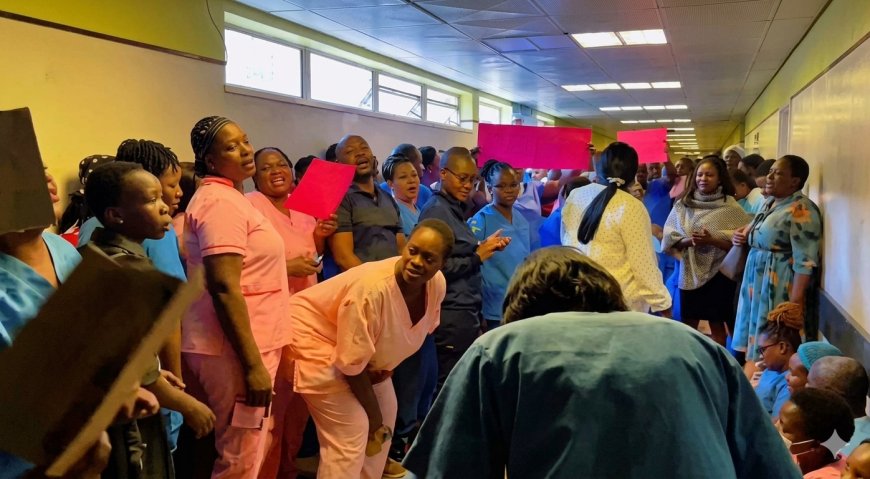
Harare - Nurses at Zimbabwe’s largest referral hospital downed tools on Monday, March 23, bringing operations at the Parirenyatwa Group of Hospitals to a near standstill and triggering chaotic scenes as wards emptied and patients were left unattended.
The strike follows a similar protest just days earlier at Sally Mugabe Central Hospital, with mounting frustration among health workers who say they are grappling with wages which is insufficient to meet basic needs amid rising fuel prices and inflation.
Wards were largely deserted by mid-morning, with only student nurses on attachment managing critical cases while qualified staff refused to work.
Patients and relatives milled in overcrowded corridors, services stalled and some voiced growing anxiety over delayed care.
Inside the hospital, tense scenes unfolded as nurses chanted and sang demands and somehow, some offensive chants kile “Ndohur*ra kombi”, questioning how they are expected to afford transport fares to work each day.
At the heart of the dispute is pay. Nurses told reporters they earn as little as US$240 plus a ZiG portion in some grades, sums they say amount to peanuts against the cost-of-living crisis.
One nurse and midwife, Maidei Dzinoreva, in an interview, laid bare the human toll on their welfare.
“We love our job. We love our patients. But how do you survive on this?” she said, describing the psychological toll of trying to care for others while barely coping themselves.
The strikers escalated their action by presenting the Health Services Commission with a detailed list of hardline demands.
They are calling for a dedicated transport allowance, rejecting the Public Service Commission’s buses because the schedules do not match shift patterns and complaining that the existing ZiG500 stipend, roughly US$15, no longer covers daily commutes that now cost up to US$6 following recent fuel hikes.
They also want free medical treatment at public facilities, arguing they can no longer afford to pay for their own care, an urgent review of housing allowances squeezed by rising rents and better provision of uniforms, which they say have become worn and scruffy through systemic neglect.
Some nurses spoke anonymously, citing fears of victimisation.
“I’m ashamed to mention that I’m a nurse because I don’t even afford to send my children to school or put a decent meal on the table,” one said.to local journaliss at the scene.
“Even some security guards earn way better than us," they added.
Health Services Commission public relations officer Kudzayi Manyepa urged the nurses to submit their grievances in writing.
“What we ask is for you to put your demands in writing so that we can attend to you,” she told the crowd, prompting insults from some protesters.
A small group of nurses was later allowed into commission offices for initial dialogue, but no resolution had been reached by midday.
The action comes against a backdrop of broader economic strain.worsemed by recent fuel increases in the country which saw some local transport fares more than double.
The government has signalled it will conduct a salary review for all civil servants in April to cushion workers from rising costs, and has urged patience in the meantime.
No immediate statement was issued by the Ministry of Health or higher authorities specifically addressing the Parirenyatwa strike.
Zimbabwe’s public health sector has a long history of labour unrest over pay and conditions, with previous strikes by nurses and doctors leaving hospitals understaffed and patients turned away.
Parirenyatwa, the country’s flagship teaching and referral centre, normally handles thousands of cases daily from across the nation.