Australia Faces A$6.2 Billion Health Bill from Diesel Heavy Vehicles, Study Finds
A new University of Melbourne study reveals diesel trucks and buses cost Australia $6.2 billion annually in avoidable health expenses. The Electric Vehicle Council (EVC) is calling for urgent government action, including Clean Air Zones and increased EV incentives to combat rising cases of asthma, heart disease and premature deaths linked to heavy vehicle pollution.
 Harry Taruva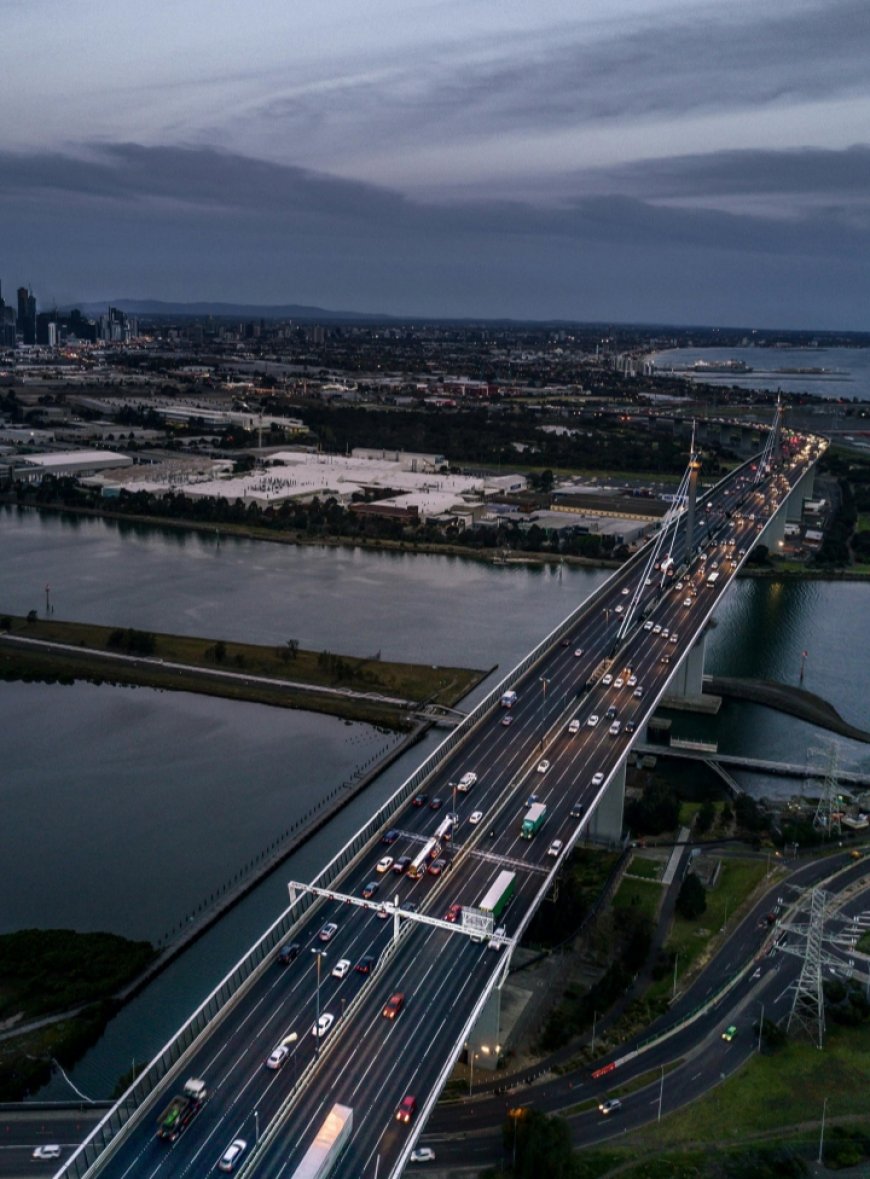
Sydney - Australia’s reliance on diesel-powered trucks and buses is generating more than $6.2 billion in avoidable health costs annually, a new report from the University of Melbourne reveals.
The findings, released Monday February 23, have prompted the Electric Vehicle Council (EVC) to call for urgent government intervention to accelerate the transition to electric heavy vehicles.
The report, titled 'The Unpriced Burden: Heavy vehicle emissions and the $6.2 billion health cost ', highlights that emissions from vehicles over 4.5 tonnes are a primary source of nitrogen dioxide (NO_2), a pollutant directly linked to cardiovascular and respiratory diseases.
Despite Australia’s relatively low average pollution levels compared to other nations, the study warns there is no safe threshold for exposure.
Chronic exposure to tailpipe emissions is associated with premature deaths, heart disease, childhood asthma and lung cancer.
"Public health has been the 'missing part of the equation' in Australia's heavy vehicle laws for decades," the University of Melbourne statement noted.
Heavy vehicles account for approximately one-quarter of all on-road transport emissions in Australia.
These costs are largely invisible in current transport policies, affecting the general public regardless of road usage.
Cameron Rimington, the EVC’s Senior Policy Officer for Heavy Vehicles, emphasized the immediacy of the issue.
"We’ve always known that burning diesel and breathing what comes out of the tailpipe is bad for us. This new research shows us just how bad.
"Switching to cleaner, electric options is not some distant climate policy out on the never-never; it’s a public health priority right now," he said.
Rimington further noted that the $6.2 billion figure represents a dollar figure on the damage paid by Australians through hospital admissions and chronic disease.
The EVC is advocating for several key policy shifts to bring Australia in line with international standards.
The council advocates for increased incentives as Australia currently offers less support for the transition to electric trucks than neighbouring New Zealand and India.
They call for establishment of clean air zones to limit the most polluting vehicles in dense urban centers.
Targeted regional action in high-volume areas like Melbourne’s inner west where hundreds of excess childhood asthma cases are estimated to be linked directly to heavy vehicle pollution has also been proposed
"Clean Air Zones should be the top of the agenda for all state and local governments who care about the air we breathe," Rimington said.
The Electric Vehicle Council continues to lobby for investment to accelerate transport electrification, arguing that the benefits extend beyond driver operating costs to include significant societal savings in healthcare.
The University of Melbourne expert position statement was authored by a multidisciplinary team including Dr. Clare Walter, Ms. Becca Liu, Dr. Ben Ewald, Dr. Gerda Kuschel, Professor Louis Irving, Mr. Farid Abu-Ghazaleh and Professor Mark Stevenson.