Women Now Occupy One-Third of Zimbabwe’s Legislature, Parliament Reveals
Women now make up one-third of Zimbabwe’s Parliament, with 120 out of 360 seats held by female legislators. This milestone, announced during Women’s Month, reflects progress driven by constitutional reforms such as the proportional representation quota system introduced in 2013. While advocates welcome the achievement, they stress that Zimbabwe still falls short of the SADC target of 50 percent representation and must ensure women wield real influence in policymaking. Structural barriers—including financing gaps, cultural norms, and limited leadership opportunities—continue to hinder broader participation, but officials remain optimistic about future gains.
 Dumisani Ndlovu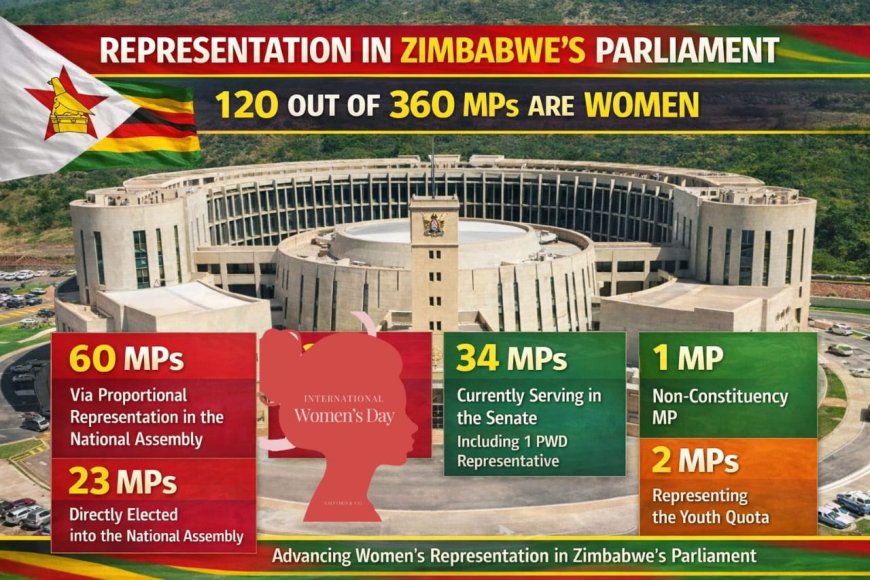
HARARE – Women now make up a third of Zimbabwe’s legislature, marking a significant step forward in the country’s push for gender equality in governance, the Parliament of Zimbabwe has revealed.
In a statement issued to commemorate Women’s Month, Parliament said 120 out of the 360 Members of Parliament in the 10th Parliament are women, representing 33 percent of the total composition.
The figures underscore what officials described as “continued progress” in expanding women’s participation in leadership and decision-making structures, long dominated by men.
“This milestone reflects the growing inclusion, representation and empowerment of women in governance,” the statement said.
Zimbabwe has, over the years, implemented constitutional and policy measures aimed at improving gender balance in political institutions, including the proportional representation quota system introduced in 2013. The mechanism has played a key role in increasing the number of women in Parliament, although calls persist for more women to win seats in direct constituency contests.
Gender advocates say while the one-third threshold is a notable achievement, it still falls short of regional and international benchmarks such as the Southern African Development Community (SADC) target of 50 percent representation.
Analysts argue that beyond numbers, the focus must now shift toward ensuring women in Parliament have meaningful influence in legislative processes, policy formulation, and oversight roles.
The latest figures come as Zimbabwe joins the global community in marking Women’s Month, a period dedicated to recognising the achievements of women and accelerating efforts toward gender equality across all sectors.
Despite the progress, observers note that structural barriers, including political financing gaps, cultural norms, and limited access to leadership platforms, continue to hinder broader female participation in politics.
Parliament, however, maintained that the upward trend signals a positive trajectory, expressing optimism that future electoral cycles will yield even higher representation of women in the country’s highest decision-making body.