
No Paper, No Receipts Books: Inside Midlands’ Struggle for Legal Identity
 Dumisani Ndlovu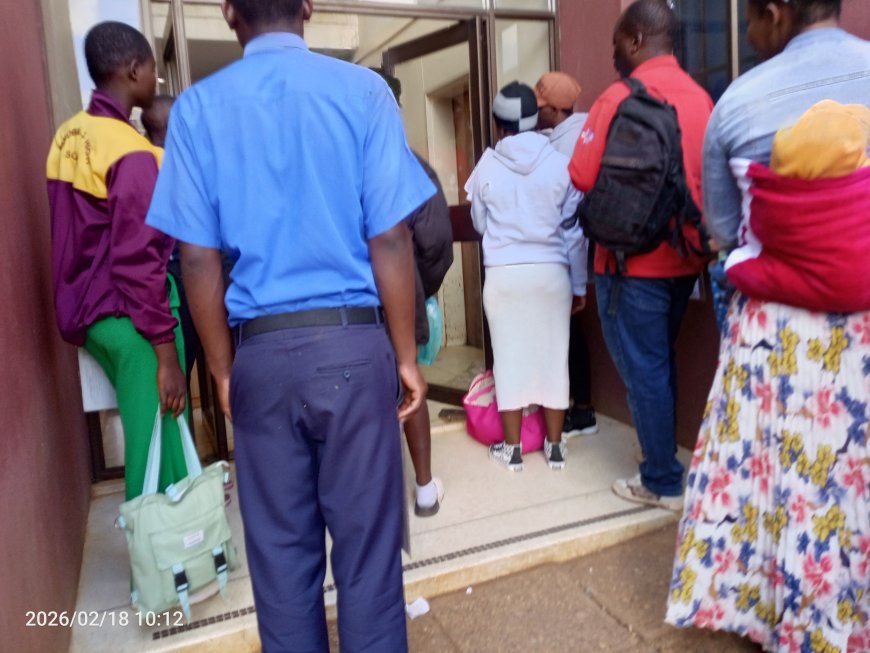
Midlands -By 10 a.m., the corridor outside the Registrar’s Office in Gweru is already filled with a thick air of impatience and quiet despair.
Mothers grip plastic folders stuffed with hospital birth records, while young men in worn jackets scroll endlessly through their phones, awaiting names that will never be called.
Pensioners lean against walls, their gazes fixed on sealed doors. Every few minutes, someone approaches the counter, only to return with disappointment.
“No paper, no receipt books, no service.”
In the ongoing civil document crisis in Zimbabwe, Midlands Province seems to bear the brunt, where the very essence of identity is held captive by bureaucracy and empty shelves.
The root of this paralysis is a significant, shortage of paper required for printing birth certificates and national identity cards, along with official receipt books needed to confirm payments.
Without these receipts, the finance department cannot legally accept any funds.
“We cannot admit money without issuing a receipt. It’s against procedure,” an official explained, glancing discreetly over their shoulder.
“Without receipts, we cannot process anything,” they said.
The outcome is administrative stagnation. Even those willing to pay are turned away.
In Mberengwa, villagers report they have begun sleeping near district offices, hoping supplies might arrive overnight.
“We take turns keeping the queue,” remarked one father of three, adding, "but when the doors finally open, they tell us there is no paper. My child cannot register for school. Does that mean he does not exist?” He said.
From Zvishavane, 24-year-old Tinashe (not his real name) has undertaken four trips in six weeks seeking an Identity card necessary for a mining job.
“They tell me to come back next week, week after week. The company cannot wait forever. Without an ID, you are nothing,” he lamented.
In Kwekwe, visible frustration has turned to open anger.
“We thought maybe Gweru would be better,” said a woman who traveled between districts with her teenage daughter.
“But it’s the same story everywhere in Midlands. Why must we suffer due to government failures?” She asked.
The crisis spilled over into the National Assembly on February 11, 2026, when Chiredzi Central Member of Parliament, Ropafadzo Makumire, demanded accountability for the breakdown in civic registration services.
The Registrar General’s Department, which falls under the Ministry of Home Affairs and Cultural Heritage, is responsible for registering births and deaths and issuing national identity documents, services that underpin citizenship, voting rights, school enrolment, passport applications and access to social services.
Home Affairs Minister Kazembe Kazembe acknowledged the shortages, stating before Parliament, “We have identified the problem and confirmed that we are short on papers for printing birth certificates and essential consumables.”
Minister Kazembe said that the Ministry of Finance is working to rectify the issue.
“I believe the Ministry of Finance is addressing that because the Registrar General’s Department, if they want money, goes through the Treasury,” he stated.
He also proposed that the Ministry seek authority to retain a portion of its own revenue in the future to prevent similar crises.
“This will enable the Registrar General’s Department to purchase supplies when they run short. Currently, the money goes directly to the Treasury. We are now engaging the Ministry of Finance for assistance,” he added.
The focus quickly shifted to the Ministry of Finance, Economic Development and Investment Promotion amid accusations that centralised control of revenue is stifling service delivery.
Makumire questioned why departments that generate revenue must “beg” the Treasury for operational funds.
“The Minister of Finance has to explain why these departments need to plead for money to function, despite their ministry depositing money into the Treasury,” he asserted.
“Why is it that we can go two months without the paper to print birth certificates?” He asked.
Critics assert that this centralization suffocates essential services. Citizne Coalition for Change MP, Corban Madzivanyika, criticized Treasury for its mismanagement, questioning why revenue-generating departments must should plead for operational funding while other Ministries reportedly exceed their budgets.
Adding to public frustration, Minister Kazembe revealed that necessary materials are produced locally by Fidelity Printers and Refiners, implying that the bottleneck is not one of supply, but of financial processing.
Back in Gweru, the human toll is apparent, not expressed in parliamentary statements but in missed opportunities.
A Form Four pupil fears she may not sit for her exams without a birth certificate as registration deadlines approach.
A cross-border traders cannot renew their passports, job seekers lose job opportunitird and a newborn remains trapped in hospital paperwork.
Midlands Acting Registrar, Rawson Musingashari, declined to comment, directing inquiries to Civil Registrar Headquarters in Harare.
Meanwhile, queues continuing to lengthen.
Midlands has become a symbol of a broader national dysfunction, where the state acknowledges the problem, Ministries pass the buck and citizens bear the consequences.
Ultimately, the crisis is not solely about paper, but recognition. It is about citizenship.