First Australian Astronaut Warns of Women in STEM Decline
Australia's first official astronaut has used her national platform to demand urgent education reform, pointing to a stagnation in the number of women entering science and mathematics.
 Harry Taruva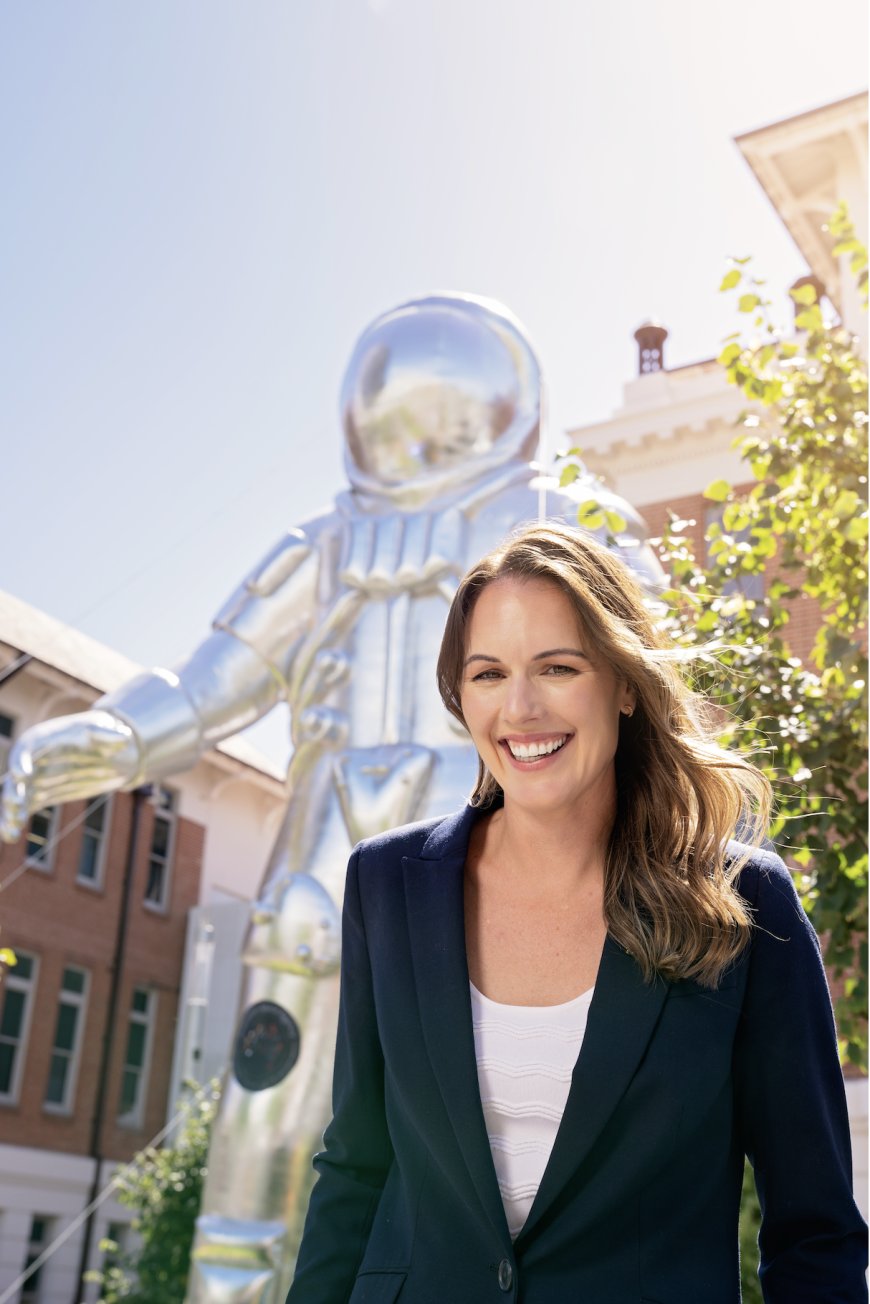
Adelaide - Australia’s first official astronaut has warned that the country risks sabotaging its burgeoning space industry unless governments halt a multi-year decline in the number of women entering scientific disciplines.
Katherine Bennell-Pegg, the 2026 Australian of the Year, said her recent national tour was focused on inspiring structural changes in education rather than her own spaceflight ambitions.
Bennell-Pegg was selected from more than 22,500 applicants to train at the European Astronaut Centre, positioning her to become the first person to fly into space under the Australian flag.
However, data from the federal government's Science, Technology, Engineering and Mathematics (STEM) Equity Monitor shows that female tertiary enrolments have steadily dropped since 2021, while the proportion of women in STEM occupations has stagnated at just 15% for three consecutive years.
"Six months as Australian of the Year has confirmed what I always believed, Australians are ready for this conversation," Bennell-Pegg said.
"Every room I have walked into, from classrooms to Universities and political settings, the appetite to back our space future and invest in the next generation of STEM talent is real," she said.
The warnings come at a critical juncture for the domestic aerospace sector.
The Australian Space Agency is currently overseeing the development of the "Roo-ver", a semi-autonomous lunar rover designed in partnership with the United States National Aeronautics and Space Administration (NASA) to launch before 2030.
Economic data indicates the federal space exploration program already yields more than seven dollars for every dollar invested.
"South Australia is truly at the heart of Australia’s space sector," Bennell-Pegg added.
"I cannot wait to come home, and to talk honestly about what this year has meant and where we go from here," she said.
Jan Chorley, Chief Executive of the Australia Day Council of South Australia, said the astronaut had fundamentally altered public perceptions of local technological capabilities.
"Katherine Bennell-Pegg has used every moment of this year to shift the conversation about what Australia is capable of," Chorley said.
"Having her back in South Australia, the state that launched the nation’s first satellite and the home of the Australian Space Agency... is a genuine privilege," she said.