Australian Drone Specialist Boresight Secures Major Western Military Contracts
Canberra-based Boresight emerges as a leader in the counter-UAS market, supplying over 5,000 target drone systems to 11 Western armed forces including the United States and UK.
 Harry Taruva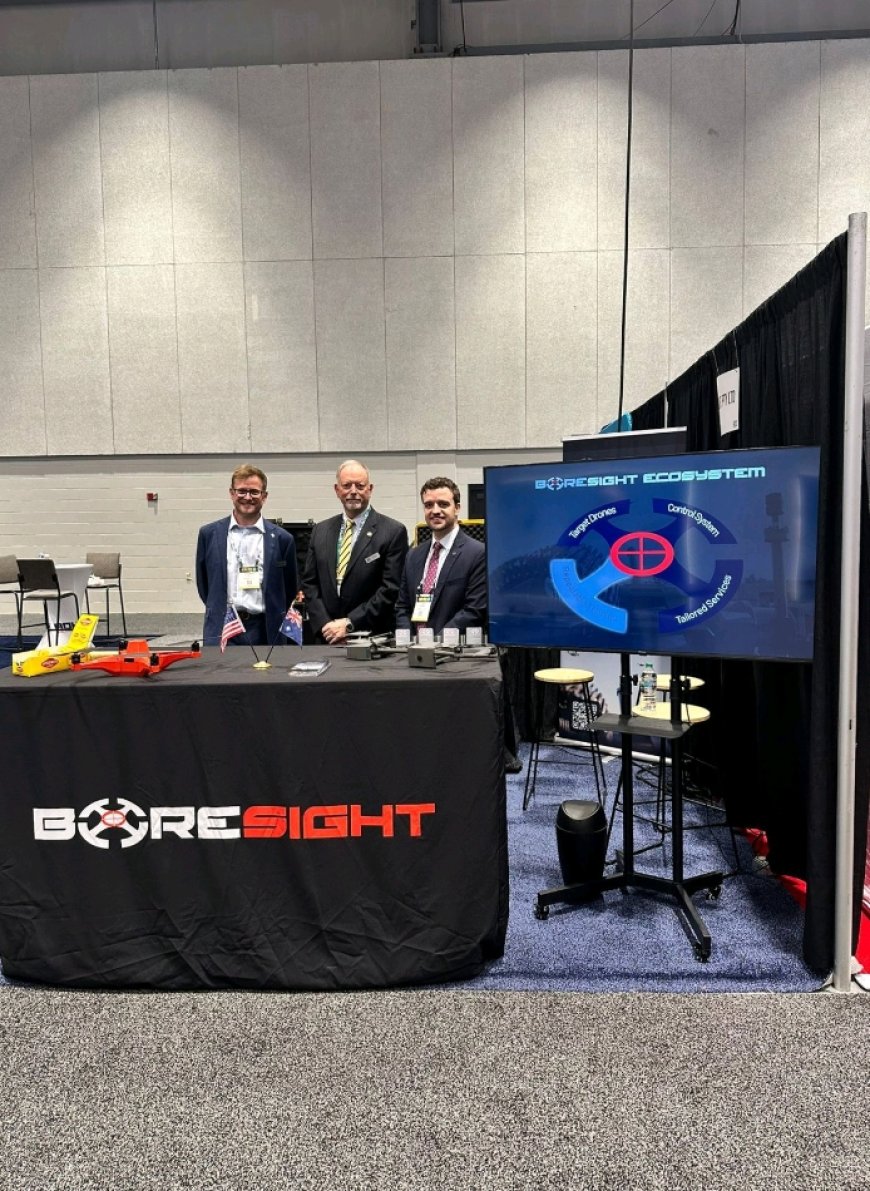
Canberra - An Australian manufacturer of specialised target drones has emerged as a primary supplier for Western military forces seeking to defend against the proliferating threat of hostile unmanned aerial systems (UAS).
Boresight Pty Ltd, based in Fyshwick, says it has delivered more than 5,000 units over the last five years, establishing a dominant position in the rapidly expanding counter-drone training market.
The company’s growth comes as defense departments in North America, Europe and the Middle East scramble to develop detection and neutralisation capabilities in response to the asymmetric warfare tactics seen in recent global conflicts.
Boresught says it provides cost-effective, "attritable" drones that mimic the flight patterns of commercial quadcopters and loitering munitions, allowing military personnel to test sophisticated defense systems without the high costs associated with traditional aerial targets.
“Every Counter-UAS system in the world needs to be tested against realistic drone targets before it can be deployed,” said Justin Olde, Managing Director of Boresight.
“You cannot train effectively against a threat you have never seen fly,” he said.
The company’s portfolio includes the flagship BQ-400 Raider and the high-speed BQ-300 FPV, designed to replicate the agile attack drones currently dominating battlefield reconnaissance.
Boresight’s client list now includes 11 Western armed forces, including all four branches of the United States military, the British Army and the Australian Defence Force.
The shift in military focus toward small-scale drone threats has created an opening for small-to-medium enterprises like Boresight to compete with established global defense giants.
Large-scale commercial contractors, including Northrop Grumman and Anduril, have also integrated Boresight’s technology into their own development and testing programs.
Industry analysts note that the rise of low-cost drones has fundamentally altered public security and modern combat, turning off-the-shelf technology into precision weapons.
“The drone threat is asymmetric by nature; a commercial quadcopter costing thousands can cause millions of dollars of damage or compromise a critical operation,” Olde said, adding that “our job is to make sure forces can train against that threat and develop the doctrine to defeat it at a cost that makes large-scale training sustainable.”
Originally established as a subsidiary of Criterion Solutions, Boresight has recently expanded its physical footprint to the United States, opening operations in Huntsville and Alabama to better serve the world’s largest defense market.
The company is currently developing new interceptor UAS and fixed-wing platforms to replicate longer-range one-way mission systems.
The company says the expansion of the target drone ecosystem aims to provide a unified ground control interface that allows operators to manage multiple drone threats simultaneously, including swarming configurations.
Boresight’s leadership maintains that providing the means to simulate these evolving threats is essential for operational readiness in an increasingly uncertain global security.