Australia Confirms Defensive Military Assistance to UAE Amid Iran Conflict
Australia announces military assistance to the Gulf, deploying an E-7A Wedgetail and AMRAAM missiles to help the UAE and regional partners defend against escalating Iranian aerial attacks.
 Harry Taruva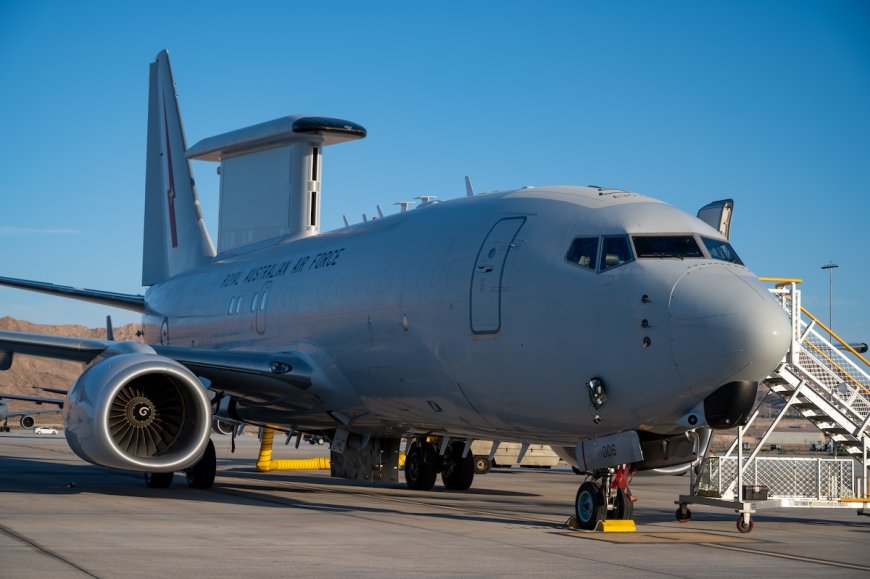
Sydney - The Australian government announced on Tuesday, March10, that it will deploy an E-7A Wedgetail surveillance aircraft and provide advanced missile systems to the United Arab Emirates (UAE), marking an escalation in its defensive contribution to Middle Eastern security amid rising tensions with Iran.
Prime Minister Anthony Albanese, alongside Defense Minister Richard Marles and Foreign Minister Penny Wong, confirmed the deployment following what Canberra described as an unprecedented scale of aerial attacks targeting 12 countries in the region.
"Iran’s reprisal attacks continue to escalate, already at a scale and depth we have not seen before; 12 countries in the region are continuing to be targeted," the Prime Minister's office said in a statement.
The move comes as the Commonwealth seeks to protect approximately 115,000 Australian citizens currently situated in the Middle East.
The E-7A Wedgetail, a Boeing-built airborne early warning and control aircraft, will be stationed in the Gulf for an initial four-week period, the Prime Minister's office said.
The platform is designed to provide long-range reconnaissance and assist in securing regional airspace.
This deployment follows a similar mission in Europe, the office said, where the aircraft supported efforts surrounding the conflict in Ukraine.
In addition to the surveillance deployment, the Albanese government intends to supply Advanced Medium Range Air-to-Air Missiles (AMRAAMs) to the UAE.
The decision follows reports from Australian officials that the UAE has intercepted more than 1,500 rockets and drones launched during the current wave of hostilities.
"The United Arab Emirates (UAE) alone has been forced to shoot down over 1,500 rockets and drones. This growing wave of dangerous and destabilising attacks from Iran puts civilian lives at risk, including Australian lives," the office said.
Despite the increased military commitment, the Australian government emphasized that the mission remains strictly defensive.
Officials stated that the Australian Defence Force (ADF) would not be engaged in offensive operations against Iran, nor would any ground troops be deployed within Iranian territory.
"The Albanese Government has been clear that we are not taking offensive action against Iran and we have been clear that we are not deploying Australian troops on the ground in Iran," the statement said.
The Australian Department of Foreign Affairs and Trade (DFAT) has already dispatched crisis response teams to the region to facilitate consular support.
While more than 2,600 Australians have successfully returned home, the government noted that significant challenges remain for those still attempting to depart.
Under the provisions of international law, the Australian government confirmed it would notify the United Nations Security Council of its actions under Article 51 of the UN Charter, which pertains to the inherent right of collective self-defense.