Climate Change Threatens Global Fishing Yields, Monash Study Finds
New research from Monash University reveals that evolutionary adaptations in fish responding to warming oceans could increase fishing industry losses by 50 percent, undermining global food security.
 Delicious Mathuthu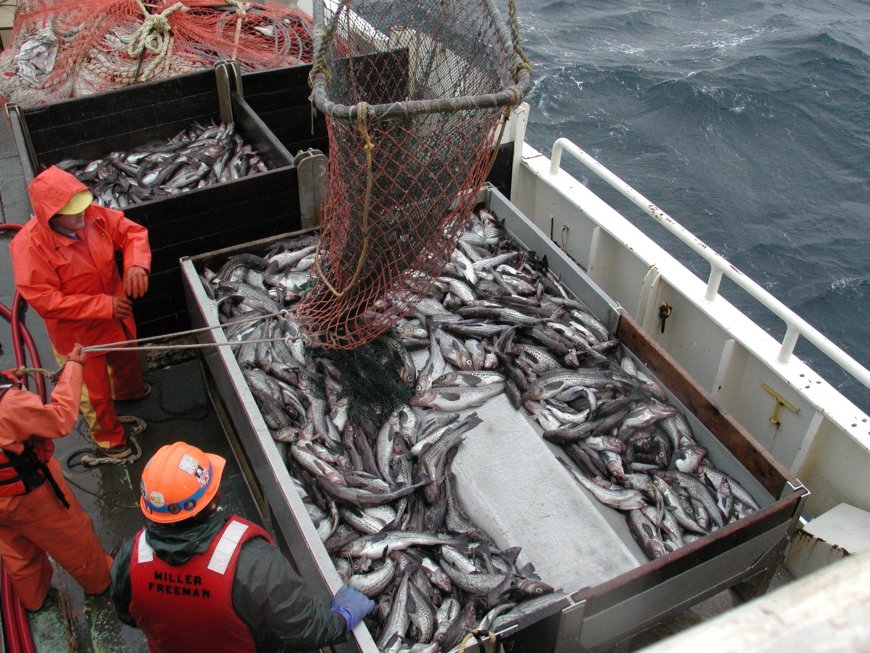
Melbourne - Evolutionary shifts in fish populations triggered by rising ocean temperatures are expected to exacerbate the decline of global fishing yields, a Monash University study released, Friday in the journal Science says.
Researchers from Monash University found that while fish are adapting to survive in warmer waters, these biological changes are likely to reduce the maximum size of individuals, leading to significantly smaller catches for an industry that provides protein to billions of people.
The study, led by researchers in Australia and Poland, utilized a new life-history model to analyze data from nearly 3,000 fish species across 43 of the world's largest fisheries.
The findings suggest that economic and volume losses to the global fishing industry will be 50 percent higher than previously estimated by models that did not account for evolutionary adaptation.
Professor Craig White, Head of the School of Biological Sciences at Monash University, noted that global warming causes fish to grow at a faster rate but reach maturity earlier, which ultimately limits their physical dimensions.
"This evolution is good for fish but bad for fisheries," Professor White said.
"Evolution negates the impacts of global warming on fish fitness but exacerbates the impact on sustainable harvests," he said.
Existing projections have often assumed that species evolution would naturally mitigate the negative impacts of climate change.
The Monash research however indicates a paradox where the survival mechanism of the species directly contradicts the requirements of human ecosystem services.
Professor Dustin Marshall, Head of the Marine Evolutionary Ecology Research Group at Monash University, said ignoring the evolutionary trends leads to an overestimation of future food security.
"Most projections assume that evolution will mitigate the impacts of climate change," Professor Marshall said.
"While that is true for the persistence of species, the opposite can be the case for ecosystem services," he said.
The research warns that every degree of atmospheric warming correlates with a further reduction in fisheries production.
The authors argue that strict adherence to climate policies aiming to limit global warming to 1.5°C is essential to preserving millions of tonnes of fish stocks that would otherwise be lost to evolutionary trends.
The study reveals that the shift in life-history patterns means even if species still exist, their utility as a sustainable food source for an increasing global population is under severe threat.
The collaborative effort was also with Professor Jan Kozłowski of Jagiellonian University.