Salvation Army Report Exposes Severe Australia Cost-of-Living Crisis, Launches Red Shield Appeal Campaign
The Salvation Army has declared a cost-of-living emergency in Australia after a survey of 4,400 emergency relief recipients revealed that 91 percent skipped meals, nearly 20 percent ate from bins, and severe energy and medical poverty are forcing vulnerable families into extreme deprivation.
 Harry Taruva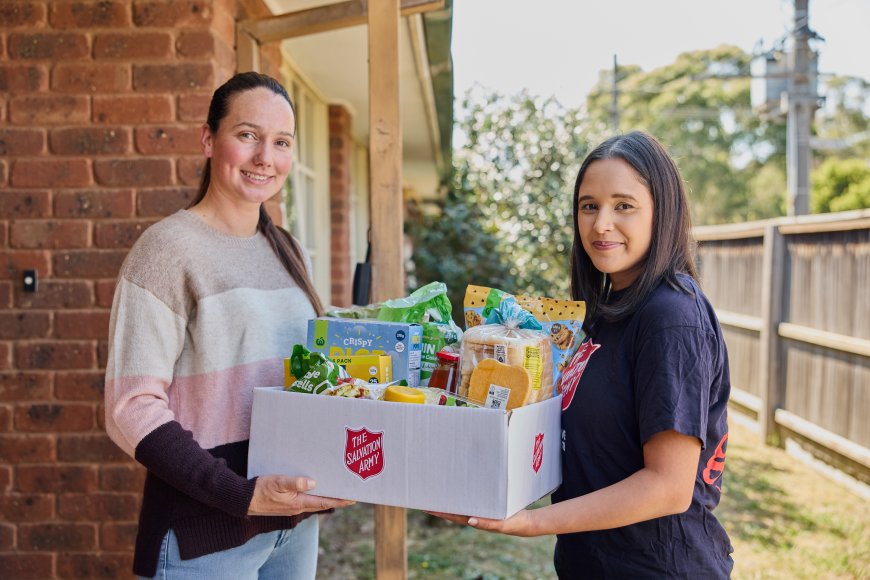
Melbourne - Australia’s cost-of-living crisis is rapidly spiralling into a humanitarian emergency for the nation’s most vulnerable populations, a report released today, May 26, by The Salvation Army has revealed.
The social services organisation issued an urgent warning alongside data revealing that nearly one in five respondents, or 19%, have been forced to eat out of bins over the past year, while 60% have survived on expired or spoiled food.
The comprehensive national assessment surveyed 4,400 Australians currently relying on the charity for emergency relief.
The findings expose a severe financial distress landscape and systemic food insecurity, with 91% of respondents stating they skipped meals in the past 12 months.
For 32% of those surveyed, skipping meals has become a daily reality, while 35% reported surviving on just one meal per day.
To stretch dwindling resources, 67% of respondents acknowledged watering down their food or drinks.
The human toll of the economic squeeze is reflected in the firsthand accounts of those seeking assistance.
"We starve, it’s that simple," one community member told researchers, "We drink water because it fills us up. We walk a bit to take our minds off this horrible life we are in, and we beg whoever we can for help."
Another respondent stated simply that they go without food, find thrown-out food and look in bins to survive.
The deprivation is increasingly impacting children, raising acute concerns among welfare advocates.
The data reveals that 35% of parents reported that their children had gone to school hungry within the past year.
Furthermore, 59% of households with school-aged children stated that students had missed school entirely because the family could not afford basic transport or fuel costs.
"It is deeply confronting to see so many people across our community pushed to such desperate levels of hardship, where parents are skipping meals, children are going to school hungry and people are eating spoiled food or even eating from bins simply to survive," said Major Bruce Harmer of The Salvation Army.
"No one in Australia should be forced to choose between heating their home, feeding their children or buying medication, yet this is the reality facing more and more people every single day," he said.
The financial strain has forced extensive cutbacks across household essentials, plunging families into what the report categorises as energy and medical poverty.
About 87% of respondents avoided using heating or cooling over the past year due to cost pressures, and 77% were left unable to properly heat or cool their homes.
To cope, the research revealed that 84% of the respondents went to bed early simply to keep warm, 63% lived in darkness relying on candles and torches and 49% frequented public spaces such as shopping centres or public bathrooms to avoid electricity usage at home.
A mother receiving assistance from the organisation detailed the meticulous budgeting strategies required to maintain her household under these conditions.
"We never have enough food. We buy what is cheap and rely on help and food banks," she said.
"I am very careful about our electricity use. My oldest son has been making do this year with only one school shirt. We put water in dish soap, shampoo, cleaning products and other items to stretch them.
We rarely buy milk, but when we do, we add water to make it last longer. We don’t spend money on clothing. We often fill prescriptions late or don’t take them daily to stretch them out further," she said.
The systemic rationing of healthcare is widespread, with 51% of those surveyed unable to afford to see a doctor, dentist or optometrist.
About 46% could not afford prescription medications and 25% resorted to utilising hospital emergency departments instead of visiting a general practitioner.
Additionally, 90% of respondents experienced periods where they could not afford public transport or fuel and 82% went an entire day without eating at least once during the year.
The escalating deprivation has triggered an unprecedented surge in demand across the charity's network of 400 centres and 2,000 localised services.
Over the past year, the organisation says it provided assistance to one person every 17 seconds, delivering more than 1.74 million sessions of care to over 228,000 people.
The relief efforts included providing over one million nights of safe accommodation and more than 1.4 million meals through homelessness services.
In response to the growing operational pressure, the organisation has launched its national Red Shield Appeal, aiming to raise A$41 million to sustain its essential services, which span homelessness support, emergency relief, domestic violence crisis care and youth services.
"Our report surveyed thousands of people who reached out to the Salvos for emergency relief support, with 90% saying they would not have managed financially without the help they received," Major Harmer said.
"But the need is growing rapidly and we cannot do this alone.
"Right now, your support can help provide food, financial assistance, safe shelter and hope to Australians doing it incredibly tough," he said.